The Most Expensive Part of Selling a Home (That Nobody Talks About)
Learn the true cost of selling a house, including hidden expenses that can affect your final sale price. Discover tips for house sales in Canberra and sell your home with confidence.

Chris Scullin
Co-Founder, Lystr
Chris Scullin is Co-Founder of Lystr, where he helps shape a smarter, more transparent way for Australians to sell property.
Published
Saturday, 6 June 2026
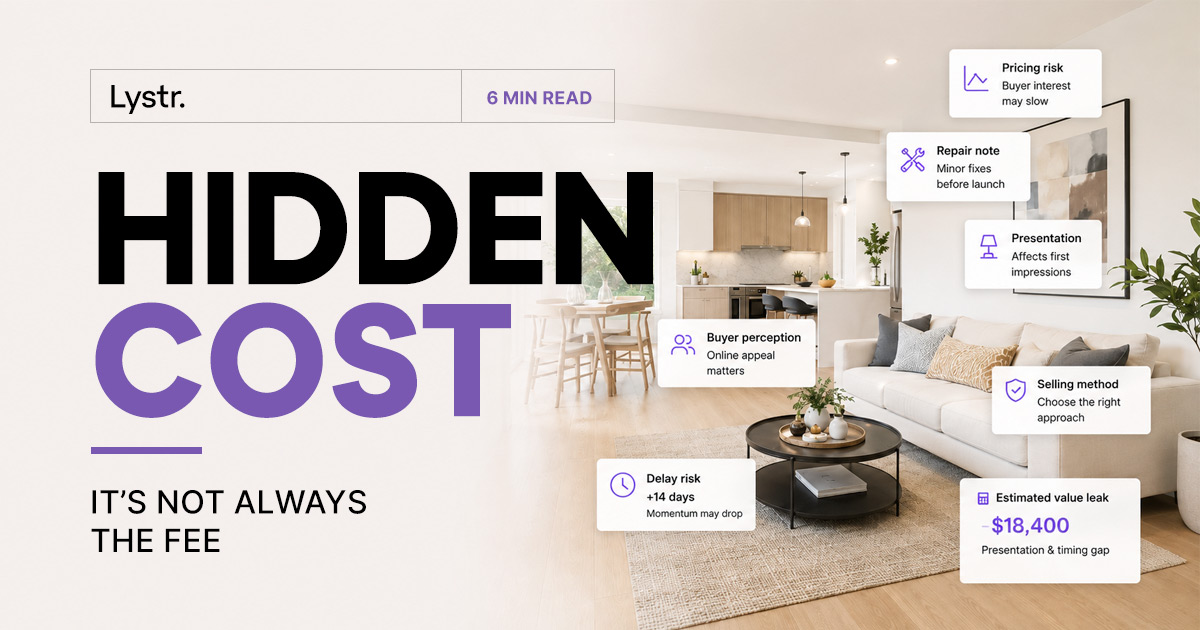
When people think about the cost of selling a home, they usually focus on the obvious expenses. Real estate commission, marketing fees, conveyancing costs, and property styling are often the first costs sellers consider when preparing their property for sale.
While these expenses are important to understand, they're not always the costs that have the greatest impact on the final outcome.
In many cases, the most expensive part of selling a home isn't a fee at all. It's the decisions made throughout the selling process that can affect buyer interest, time on market, and ultimately the final sale price. If you're preparing to sell your home, understanding these hidden costs can help you make more informed decisions and maximise your return.
Understanding the True Cost of Selling a House
When researching the cost of selling a house, most homeowners focus on the expenses that appear on invoices and settlement statements.
These typically include:
- Agent commission
- Marketing and advertising costs
- Conveyancing and legal fees (typically around $2,000)
- Building and pest inspections (typically around $1,800)
- Property styling and presentation costs
- Auction fees (if applicable)
While these expenses contribute to the overall cost of selling, they don't tell the full story.
The way a property is prepared, priced, marketed, and sold can also have a significant impact on the final result. In some cases, these factors can cost sellers far more than the fees they spend time comparing.
The Cost of Incorrect Pricing
Pricing is one of the most important decisions you'll make when selling a property. If a home is priced too high, it may attract fewer enquiries and spend longer on the market. If it's priced too low, sellers risk accepting less than the property's true market value.
A common misconception is that setting a higher asking price simply leaves room for negotiation. In reality, today's buyers have access to extensive market data and often compare multiple properties before deciding which homes to inspect.
When a property is perceived as overpriced, buyer activity can slow significantly. This can lead to fewer inspections, reduced competition between buyers, less negotiating leverage and a longer selling process. Over time, these factors can have a greater impact on the final sale result than many of the visible costs associated with selling.
The first two weeks on the market are often the most important. This is when a property receives the greatest level of exposure and attracts the highest level of buyer attention. Think of it like the launch of a new product. When it's first released, there's strong interest and people are eager to take a look. If buyers see the product and decide it's not priced appropriately, that initial excitement can quickly fade.
The same principle applies to property. If a home enters the market at a price that buyers perceive to be too high, many may choose not to inspect it or enquire further. By the time the price is adjusted, much of the initial attention has already passed, meaning fewer buyers are actively engaging with the listing.
This is one reason accurate pricing is so important. While some agents may suggest an optimistic sale price to secure a listing, setting unrealistic expectations can ultimately reduce buyer engagement and make it harder to achieve the best possible outcome.
The Cost of Poor Presentation
First impressions play an important role in real estate.
Today, most buyers begin their property search online, meaning your photos and property presentation often determine whether a buyer chooses to enquire or attend an inspection. Simple improvements such as decluttering, completing minor repairs, refreshing paintwork, or investing in professional photography can make a meaningful difference to buyer interest.
While these improvements may involve some upfront costs, they can help a property stand out in a competitive market and attract stronger buyer engagement. For this reason, presentation should be viewed as an investment rather than simply another selling expense.
If your home would benefit from repairs, maintenance or cosmetic improvements before going to market, there is now a range of finance options available, such as Elepay. These services can help fund preparation and presentation costs upfront, allowing you to complete improvements before your property is listed.
Improving your property's presentation before launch can increase buyer appeal, generate stronger interest and help maximise its sale potential. Before committing to major renovations, focus on the improvements most likely to influence buyer perception. In many cases, simple updates such as decluttering, completing minor repairs, enhancing street appeal and investing in professional photography can have a greater impact than costly upgrades.
The Cost of Choosing the Wrong Selling Method
Today's homeowners have more options than ever before when it comes to selling property. Traditional real estate agents, auction campaigns, private sale platforms, and fixed-fee selling services all offer different levels of support, flexibility, and cost.
There is no single approach that suits every seller.
The right option will depend on factors such as:
- Your budget
- Your confidence managing enquiries and inspections
- The level of support you require
- The type of property being sold
- Local market conditions
Understanding your options can help ensure you're paying for the services you genuinely need and receiving value from the selling method you choose.
House Sales in Canberra: Why Local Knowledge Matters
Property markets can vary significantly between locations, and Canberra is no exception. Buyer demand, competition levels, and selling conditions often differ between suburbs, property types, and price ranges.
What works for an inner-city apartment may not be the most effective strategy for a family home in an established suburb. Understanding local market conditions can help sellers make more informed decisions around pricing, marketing, and timing, improving their chances of achieving a strong result.
Why More Sellers Are Looking Beyond Traditional Costs
Historically, homeowners have focused on reducing commission rates and comparing agency fees when preparing to sell. While these costs remain important, many sellers are now taking a broader view of what creates value throughout the sales process.
Rather than simply asking "What will it cost to sell my home?", many homeowners are asking:
- What support do I actually need?
- What selling method suits my circumstances?
- How can I maximise my final sale price?
- Where can I reduce unnecessary costs?
These questions are helping sellers make more informed decisions and better understand the true cost of selling.
How Lystr Helps Sellers Stay in Control
At Lystr, we believe homeowners should have greater transparency and control throughout the selling process.
Rather than relying on traditional percentage-based commission structures, Lystr offers a fixed-fee model that allows sellers to access professional marketing tools, property listing platforms, and expert support without sacrificing a significant portion of their equity.
This approach gives homeowners a clearer understanding of their selling costs while allowing them to remain actively involved in the process.
Final Thoughts
The cost of selling a home extends beyond commission rates and marketing expenses.
Presentation, pricing strategy, local market knowledge, and choosing the right selling method can all influence the final outcome and the amount a seller ultimately walks away with.
By understanding both the visible and hidden costs involved, homeowners can make more informed decisions and approach the selling process with greater confidence.
The most expensive part of selling a home isn't always the fee you pay, it's the value you may lose when important decisions aren't carefully considered.