How Real Estate Commission Works
Learn how real estate commission is calculated, what real estate agent fees in Canberra include, and how to compare selling options to keep more from your home sale.

Chris Scullin
Co-Founder, Lystr
Chris Scullin is Co-Founder of Lystr, where he helps shape a smarter, more transparent way for Australians to sell property.
Published
Thursday, 4 June 2026
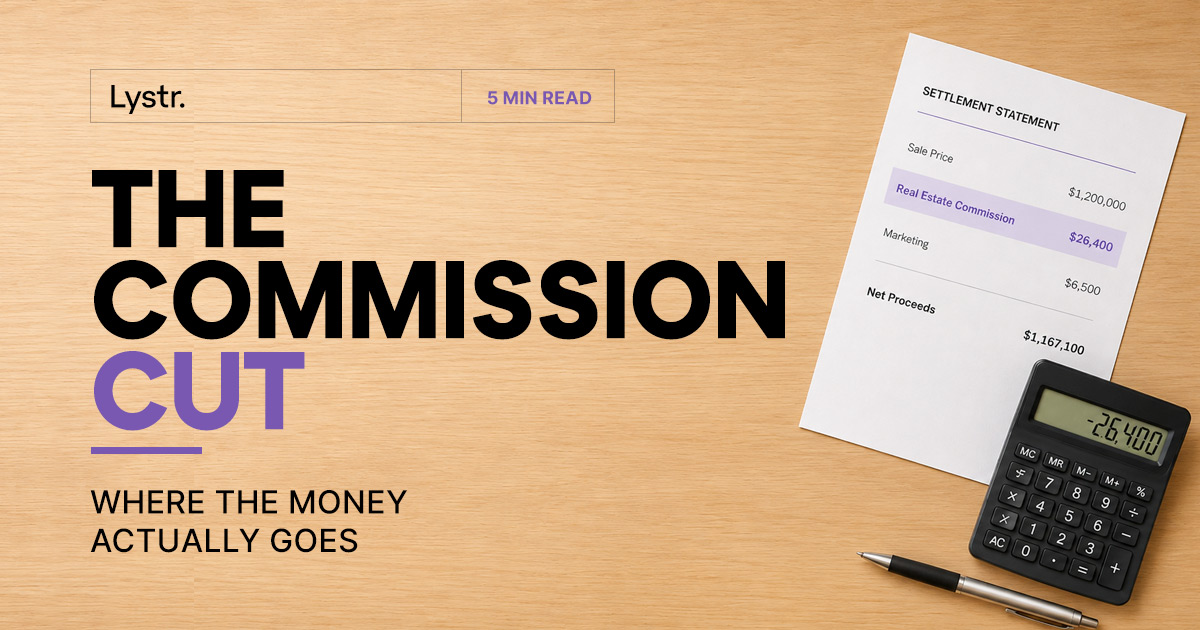
One of the biggest costs associated with selling a property is the real estate commission. Whether you're selling for the first time or have sold property before, understanding how real estate commission works can help you compare your options and make a more informed decision.
What Is Real Estate Commission?
Real estate commission is the fee paid to a real estate agent for selling a property. Traditionally, this fee is calculated as a percentage of the final sale price and is typically payable once the property is sold and settlement has occurred. For example, if your home sells for $800,000 and the agreed commission rate is 2.5% plus GST, the commission would be $22,000 (including GST). This means that before any additional selling costs, such as marketing, conveyancing, or advertising fees are taken into account, the seller would receive approximately $778,000 from the sale proceeds.
While commission structures can vary between agencies, most traditional real estate agents charge a percentage-based fee, meaning the amount you pay increases as your property's sale price increases.
What Does Real Estate Commission Cover?
Commission predominantly covers the negotiation and sale of the property, though it may include:
- Property appraisals and pricing advice
- Marketing package recommendations
- Managing enquiries from buyers
- Conducting open homes
- Negotiating offers
- Pre-exchange and pre-settlement inspections
However, it's important to note that marketing costs are usually charged separately from commission.
This means that even after paying real estate commission, you will be required to cover additional expenses such as professional photography, floor plans, online advertising, signage, brochures, and premium listing upgrades.
How Much Are Real Estate Agent Fees in Canberra?
In Canberra, the average commission is around 2.2%, however, this can vary on an agent-by-agent basis and generally sits between 1.5% and 3.5%.
There is no fixed commission rate across the industry. Real estate agent fees in Canberra can vary depending on factors such as:
- The agency you choose
- The property's location
- The property's expected sale price
- The level of service being provided
- Market conditions at the time of sale
Traditionally, many Canberra homeowners have paid commission-based fees that can amount to tens of thousands of dollars when selling higher-value properties.
For example:
| Sale Price | Commission Rate | Commission Cost |
|---|---|---|
| $700,000 | 2.5% | $17,500 |
| $900,000 | 2.5% | $22,500 |
| $1,100,000 | 2.5% | $27,500 |
As property values continue to rise, commission costs rise alongside them, even though the work required to sell the property may not increase proportionally.
This is one reason why many sellers are now questioning whether traditional commission structures still offer the best value.
Understanding Real Estate Fees in Canberra
When comparing agencies, it's important to look beyond the commission percentage alone.
Real estate fees in Canberra can include several different costs, such as:
- Agent commission
- Marketing packages
- Professional photography
- Floor plans
- Signboards
- Premium online listings
- Auctioneer fees (if applicable)
A lower commission rate does not always mean lower overall selling costs if additional fees are being added elsewhere.
Before signing an agency agreement, ask for a clear breakdown of all costs involved so you can accurately compare your options.
Can Real Estate Commission Be Negotiated?
In many cases, yes.
Commission rates are often negotiable, particularly if:
- Your property is expected to sell quickly
- The property is located in a high-demand area
- You have received multiple proposals from different agencies
- The property has a high expected sale price
Many sellers assume commission rates are fixed, but agencies may have flexibility depending on the circumstances.
Obtaining multiple sales proposals can help you understand what's being offered across the market and give you greater confidence when discussing fees.
Why More Sellers Are Exploring Alternative Selling Models
The traditional commission model has been the industry standard for decades, but it is no longer the only option available.
Today, many homeowners are seeking greater transparency, more control, and lower selling costs.
Rather than paying a percentage-based commission, some modern selling platforms offer fixed-fee services that allow homeowners to market and sell their property while retaining more of their equity.
This approach can be particularly appealing for sellers who are comfortable managing some aspects of the sales process themselves or who want a clearer understanding of exactly what they're paying for.
How Lystr Does Things Differently
At Lystr, we believe selling your home shouldn't mean sacrificing a large portion of your sale proceeds to fees.
Instead of charging traditional percentage-based real estate commission, Lystr offers a transparent, fixed-fee model designed to give homeowners more control over the selling process.
You still receive access to professional marketing tools, property listing platforms, enquiry management systems, and expert support, but without the uncertainty of a commission that grows alongside your property's value.
This means you know exactly what you're paying from the start, helping you budget more confidently and keep more of the proceeds from your sale.
Choosing the Right Selling Option
Every homeowner's situation is different. Some sellers prefer the full-service experience of a traditional real estate agent, while others prioritise flexibility, transparency, and cost savings.
When comparing your options, consider:
- The total cost of selling
- Whether marketing costs are included
- The level of support provided
- How much control you want over the process
- The potential savings available through alternative models
Final Thoughts
Understanding how real estate commissions work is an important part of planning a property sale. While commission has traditionally been calculated as a percentage of the final sale price, it’s clear that the total cost of selling a home can include far more than just the agent’s fee.
For many homeowners, comparing real estate fees and reviewing different approaches can help provide a clearer picture of what the true cost of selling looks like. Once marketing, advertising, and additional service fees are factored in, the overall expense can vary significantly between providers.
This is why more sellers are taking the time to compare their options more carefully rather than focusing on commission alone. The right approach often comes down to transparency, control, and value - not just the percentage being charged.